
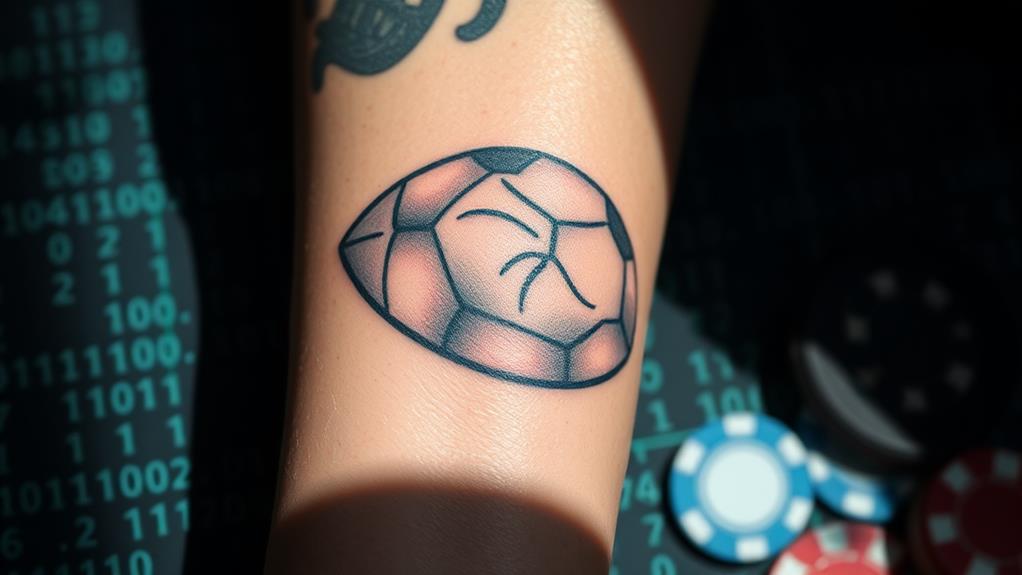
Football tattoos symbolize loyalty but may also create vulnerabilities in online casino security. These tattoos can serve as personal identifiers, attracting cybercriminals who exploit tattoo significance for phishing attacks. Individuals showcasing their tattoos on social media inadvertently add to their digital footprint, providing hackers with insights into their interests and affiliations. Weak passwords and a lack of awareness about cybersecurity heighten these risks. To protect against identity theft and financial loss, individuals must implement robust security measures and remain vigilant. A deeper analysis reveals critical strategies to enhance personal safety in this digital landscape.
Key Takeaways
- Football tattoos can signal team loyalty, making fans susceptible to targeted phishing attacks related to online casinos.
- Tattoos may reveal personal interests, allowing hackers to craft deceptive communications that exploit those interests.
- Sharing tattoo images on social media increases the risk of cataloging personal identifiers by malicious actors.
- Weak passwords associated with online casino accounts can be further compromised if tattoos indicate personal affiliations.
- Awareness of security practices is essential for fans with tattoos to protect their online identity from cyber threats.
Understanding Football Tattoos
Football tattoos, emblematic of fan loyalty and team spirit, have gained significant popularity in recent years. These tattoos serve as a direct reflection of an individual's connection to football culture, often commemorating a specific team, player, or memorable moment in the sport. The symbolism behind these tattoos can vary widely, encapsulating everything from personal identity to collective group affiliation. In a similar vein, the rise of online platforms like Arsenal33 showcases how digital communities foster connections among fans and players alike.
Within football culture, tattoos are not merely decorative; they possess deep-rooted significance. For many fans, sporting a team emblem or iconic imagery signifies a lifelong commitment and passion for the sport. This form of body art can act as a badge of honor, establishing a sense of belonging within a broader community of supporters. Additionally, the choice of design may convey personal narratives, illustrating how football has influenced an individual's life journey.
However, as the trend of football tattoos proliferates, it is essential to reflect on the implications of tattoo symbolism within broader contexts, such as online security. The emotional ties that these tattoos represent could be exploited if individuals are not vigilant about how they share their personal stories and affiliations in digital spaces. Hence, understanding the multifaceted nature of football tattoos is vital for ensuring personal safety.
Cybersecurity Risks Explained
The increasing interconnection of personal identities and digital platforms has heightened the importance of understanding cybersecurity risks associated with online interactions. As individuals increasingly share personal information, including tattoo symbolism and other identifiers, digital footprints become more pronounced, making it essential to recognize the vulnerabilities that arise. This is particularly relevant in the context of online casinos like Arsenal33, which prioritize security measures to safeguard user data. Key cybersecurity risks include:
- Phishing Attacks: Cybercriminals may exploit personal details gleaned from social media or online gaming platforms to craft convincing phishing schemes.
- Data Breaches: Online casinos are prime targets, where the exposure of personal data can lead to identity theft and financial loss.
- Social Engineering: Understanding the significance of tattoos can enable malicious actors to manipulate individuals into revealing sensitive information.
- Weak Passwords: Many users fail to adopt strong security practices, allowing attackers easy access to accounts linked to personal identifiers.
How Tattoos Exploit Security Gaps
How can seemingly innocuous tattoos become gateways for security vulnerabilities? In the domain of online casinos, tattoo symbolism and design trends can inadvertently expose players to risks. Tattoos often serve as personal identifiers; however, when individuals display tattoos that align with popular themes or symbols, they may inadvertently signal affiliations or preferences that could be exploited by malicious actors.
For instance, tattoos reflecting specific sports teams or gambling motifs may attract undue attention, potentially leading to targeted phishing attacks or social engineering schemes. The design trends associated with such tattoos can provide hackers with insights into an individual's interests, creating opportunities for tailored, deceptive communications aimed at compromising online accounts.
Moreover, the increasing normalization of sharing images on social media platforms exacerbates these vulnerabilities. Once a tattoo is shared online, it becomes cataloged and searchable, allowing cybercriminals to gather intelligence about their targets. In an environment where personal branding is prevalent, the tattoos that individuals choose to display can turn from mere expressions of identity into unintentional markers of vulnerability, necessitating a reassessment of how personal symbols are perceived in the context of digital security.
Protecting Your Online Identity
In an era where personal branding intertwines with digital presence, safeguarding online identity has become paramount for individuals, particularly those engaged in online gaming. The rise of identity theft and privacy concerns necessitates a proactive approach to protect personal information. As online gambling platforms often require sensitive data, players must be vigilant in securing their identities to prevent unauthorized access and exploitation.
To fortify your online identity, consider the following measures:
- Utilize Strong Passwords: Create complex passwords that combine letters, numbers, and symbols, and change them regularly.
- Enable Two-Factor Authentication: This adds an extra layer of security, requiring a second form of verification before granting access.
- Monitor Account Activity: Regularly review account statements and gaming activity for any unauthorized transactions or suspicious behavior.
- Educate Yourself on Phishing Scams: Be cautious of unsolicited emails or messages that request personal information, as these may be attempts to steal your identity.
Best Practices for Online Safety
Guaranteeing online safety requires a multifaceted approach that encompasses various strategies tailored to mitigate risks associated with digital interactions. One of the foremost practices is effective password management. Users should employ complex and unique passwords for each account, utilizing password managers to store and generate these credentials securely. This reduces the likelihood of breaches resulting from weak or reused passwords.
Additionally, data encryption is vital in safeguarding sensitive information. Utilizing encryption protocols for data transmission protects against unauthorized access and guarantees that personal data remains confidential. For instance, confirming that online casinos employ SSL (Secure Sockets Layer) certificates can help verify that data exchanged is encrypted and secure from interception.
Regular software updates are also essential, as they patch vulnerabilities that could be exploited by cybercriminals. Moreover, enabling two-factor authentication (2FA) adds an extra layer of security, requiring users to verify their identity through an additional method beyond just a password.